Average Reviews:

(More customer reviews)Are you looking to buy The War in American Culture: Society and Consciousness during World War II? Here is the right place to find the great deals. we can offer discounts of up to 90% on The War in American Culture: Society and Consciousness during World War II. Check out the link below:
>> Click Here to See Compare Prices and Get the Best Offers
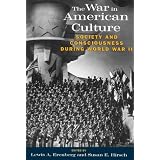
The War in American Culture: Society and Consciousness during World War II ReviewThis book is a must-read, despite the fact that there are thousands of histories written about the Second World War. Its thirteen chapters discuss different topics, so there is something for everybody, and every essay is meticulously crafted, making them both delightful and simple to read. This book provides an insight into World War II that few other books are able to provide because of the wide-scope of the thirteen essays, yet all of the essays revolve around a central theme which makes this paper useful in studies, yet provocative and interesting.Viewed by many as "the last good war," World War II smashed Nazism, and resulted in a clear-cut victory for America which became the richest nation on earth.However, this book stomps out the idea of the last good war by bringing attention to the irony that while Americans were fighting a war on inequality abroad, they had their own home-front war to wage on race, gender and ethnic relations. Erenberg and Hirsch's book is a collection of thirteen different articles that provide insight into American culture during the World War II within a variety of contexts ranging from censorship to swing and zoot suits to privacy.
The first part of the book, titled "The Quest for National Unity" contains three articles and is, by far, my favorite section. The essay by Perry R. Duis examines the war's effect on privacy in Chicago. He interestingly points-out that for the first time, Americans' homes were invaded by strangers who, in the case of disaster, needed to know the basic lay-out of every home and a detailed description of the family members and their schedules in the unfortunate event of a necessary rescue. George H. Roeder Jr.'s article takes readers on a fascinating ride through formerly censored photographs as he explains what was censored during the war and why. This article shows readers how the American government strictly controlled public opinion during the war and even gives readers a peek into photographs that somehow made it past the watchful eye of the censors. Lary May's article examines how the film industry supported ethnic pluralism and utopian ideals during the war, and is certain to introduce key players like Frank Capra and his Why We Fight series. One of his primary examples is Lifeboat, a movie that portrayed European immigrants as full Americans.
The remainder of the book provides insight into varying experiences of American minorities, including women, Japanese and Chinese-Americans, African-Americans, Mexican-Americans and Native Americans. The most fascinating aspect of Erenberg and Hirsch's book is that some essays examine the different minorities as a micro-history, while others do a comprehensive study.The War in American Culture: Society and Consciousness during World War II Overview
Want to learn more information about The War in American Culture: Society and Consciousness during World War II?
>> Click Here to See All Customer Reviews & Ratings Now

0 comments:
Post a Comment