Average Reviews:

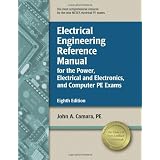
(More customer reviews)Are you looking to buy Electrical Engineering Reference Manual for the Power, Electrical and Electronics, and Computer PE Exams? Here is the right place to find the great deals. we can offer discounts of up to 90% on Electrical Engineering Reference Manual for the Power, Electrical and Electronics, and Computer PE Exams. Check out the link below:
>> Click Here to See Compare Prices and Get the Best Offers
Electrical Engineering Reference Manual for the Power, Electrical and Electronics, and Computer PE Exams ReviewAs a Registered Professional Engineer in electrical engineering, I typically upgrade my copy of this book as it is updated.The author is undoubtedly a smart man but this book is more like a nice "coffee table" reference than a text built around solving problems.As a reference text, it is mediocre at best in that the author seems to be influenced by a background more tailored to engineering physics than hardcore electrical engineering.
Let's take power systems engineering as an example.Absolutely ZERO percent of the book is devoted to protective relaying and this topic is VERY important to the power engineer-whether he works in an industrial setting or whether he works in the electrical utility environment.
Another example: The book claims to talk about illumination.It spends several pages on the physics of light disperson that are covered in a basic electricity and magnetism course.This IS NOT what the PE exam is testing. "Illumination" in their definition pertains to the ability to select and apply lighting fixtures based on a given illumination level. The author simply mentions several methods of lighting design and gives you ABSOLUTELY NO FORM of examples.
While I'll grant that the author attempted to discuss "lightning protection" as part of the book, his discussion was extremely superficial and looked more like a Wikipedia compendium of information rather than a PE oriented approach to what minimum concepts or calculations the PE candidate and practicing engineer should have.
I also observe that the number of practice problems given are too few to be helpful. PE candidates need lots of worked problems.
There are other things that book simply does not cover as it attempts to be "all things to all people" with the new disciplline specific PE exams in power,controls/electroncic/communications, and computer engineering.
The better approach here would be to break the PE reference manual from PPI up into the different topic areas rather than keep it as 1 gigantic book that serves NO ONE's purpose. Then, get subject matter experts from each of the various electrical disciplines to write the books or get a team to write different parts of each new book for the the discipline specific exam.
Having published one text book myself, I can tell you that writing, editing, and then laying out a book is hard. The Professional Publications crew have a template that is based around an exam format that does not exist any more.
Accordingly, they and the electrical engineers using the text would be much better served if they broke their template and re-did the book from the ground up.
I must tell potential electrical PE candidates that Professional Publications is the only firm that attempts to put some order into the chaos created by the exam specifications. HOWEVER, please keep in mind that their "flag ship" products have been (and will ALWAYS be) their Civil Engineering, Environmental Engineering, and EIT products. This is because this is the company founder's bias and what he understands. It's also the case that a large majority of potential PE's come from the Civil Engineering discipline so it makes sense to improve your product line based on your market place. Unfortunately, that's bad news for us as electrical engineers.
Electrical PE's are much fewer in number as fewer EE's actually need to take the exam to get a job in most businesses (save electrical engineers building power systems in an industrial/commercial setting or the electrical utility engineer). Because the electrical PE market place is much smaller with less potential for profit, it is not surprising that the quality of the material for any of the discipline specific electrical exams is fair to middling-regardless of the company who publishes them.
Sadly, most universities no longer require either a Power Systems Analysis or Electrical Machines course as part of the survey curricula at most schools.
If you're unfortunate enough to have attended a university where only electronics,controls or communications are offered and then wind up working in the power system field as I did, be prepared to put in alot of extra effort because the textbooks written for undergraduates on power systems are poor AND most of them do not have published solutions manuals that will help you learn to work problems.
You've got to expect to put in 2X as much work as your civil engineering colleagues because there are simply fewer resources available for you.
Review classes also help a great deal-when you can find them. Again, this is because fewer EE's take the exam and fewer still have the time, patience or acumen to teach the material to others.
I took review classes many years ago and ultimately I attended 2 different reviews. One of them centered more around Professional Publications materials while the other centered around notes created by the author.
I wish you the best of luck and use this for what it is- a reference only.Electrical Engineering Reference Manual for the Power, Electrical and Electronics, and Computer PE Exams Overview
Want to learn more information about Electrical Engineering Reference Manual for the Power, Electrical and Electronics, and Computer PE Exams?
>> Click Here to See All Customer Reviews & Ratings Now

0 comments:
Post a Comment