Average Reviews:

(More customer reviews)Are you looking to buy Your Free Open Source Music Studio? Here is the right place to find the great deals. we can offer discounts of up to 90% on Your Free Open Source Music Studio. Check out the link below:
>> Click Here to See Compare Prices and Get the Best Offers
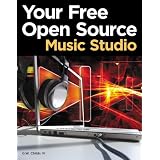
Your Free Open Source Music Studio ReviewThis book is a chatty and general overview of how you can build an open source music studio that is essentially free and low cost. The book reads well and summarizes many different kinds of software, mixing software, studio software, fx software and synthesizer software very well. The book has, for my interests, two limitations. One is that the information is already a fair bit out of date. Many items of free and open source software are not mentioned and some of the ones mentioned have already undergone some significant evolution since the book was written. Two is that it handles a lot about Mac and PC software options, but very little about Linux option, even though Linus has strongly pioneered open source. Linux Multi Media Studio is not covered. The book, too, is almost a catalog of what you can get and some description of the features to consider. But there is nothing about how, for instance, to interface DSSI plug ins with Rosegarden or LMMS, what kinds of audio cards are most compatible with which software choices, and how well the WINE Linux program allows Linux users to use music software for a PC or Mac.Part of my commitment as a reviewer of computer stuff is to come from the Linux angle and give a review that helps Linux users know what is going to work for them and what is best left alone to save time and money. This book has almost no advice that I feel would have been worthwhile for a person trying to set up a Linux Studio (which I have done). I use Linux Mint OS 9 (which piggy backs on Ubuntu and runs everything Ubuntu does fairly easily). I have found that people need to research which multi-core chips run best on Linux, because Music software puts the CPU through the paces and is likely to find any weakness in the chipset that can cause a kernel crash. I have found the Intel I-5 CPU to be the most stable in this regard and has plenty of smooth power to keep up with multi-track processing of audio information. I have found Audacity to be fantastic, but sometimes you do hit a glitch and it crashes. Although it is decent in recovery mode, something is usually lost with a crash. I found the crashes happen usually when playing tracks with different sampling rates. LMMS is fairly stable but also has glitches and some of the VST synths will crash the software. My favorite software synth the ZynAddSubFx is AMAZING and is not covered in the book at all. It is cross platform, free, and to me it runs better than some software that even tags at about $180. I do ambient healing meditation music and find the harmonic processing features to make this the most ambient friendly synth I have ever found. Although I found about 50 free software synths (more than the author shares in his book), this is the one I have settled on using. I notice on youtube that many people do feel the same way that I do. The Zyn can directly record to the hard drive without being a VST plug in (though there is a VST version also for use in LMMS that works very well and which can take advantage of many aspects of working in the LMMS environment. I found on a dual core or monochore that Zyn and Audacity have been all I need. The native "sound recorder" has been handy with a simple condenser mike.
In terms of hardware, there are new issues with the emergence of Windows 7 that are also not touched on at all. It seems that digital audio interfaces are needed for this OS and many old computers have analog interfaces (though Linux does not have a problem with analog interfaces or viruses for that matter).
The book also spends, in my opinion, a little too much time with Reason software and its components which is not free and not open source. Perhaps there is a free bundled version, but this is not open source and can be severely limited in its function until you pay money and unlock it. Reason is a fantastic bit of software, but it is very expensive and has no Linux presence at all. LMMS is the Linux alternative. There are a few experimental modular software synthesizers in the repository that may even be superior to Reason in flexibility and which take some time to learn and interface with the audio card. I was hoping for a review of some of them, but none of them are mentioned. Pure Data seems the most promising to me in this regard, but I am not an expert on it and have not yet gotten it to work.
In short, this book is a little too weak for people who are wanting to build on a Linux platform. The information is interesting but dated (the I-5 chip did not even come out so the strongest chip mentioned is the Core 2 Duo). It favors Mac and Windows, but does not mention Windows 7. It does not understand the difference between freeware, shareware, and open source (the latter is not only free, but means that a community can alter the code in order to improve it, not just those that hold copyright, as long as they follow the GNU public license rules). I was looking forward to reading a book that was more Linux oriented than it was and found it lacking in support. I did like what the book did say and found it worthwhile to peruse. I plan to check out some of the software mentioned. But as far as what the title suggested is the subject, it is a little weak. I still give it 4 stars, because it is an interesting catalog of short essays about making a low cost studio, but really a free one or an open source one. I did not give it a 5 star rating because of the weaknesses mentioned above. I did not give a 3 star rating, because it is a hard subject to summarize unless you are going to make a very thick book.
I wrote a little more in my review than I usually do, because I am committed to supporting Linux users and reviewing for them, and happen to have some knowledge about the subject from my own experience in setting up and using a studio. Most of the compositions on my youtube channel were done with Audacity and the Zyn, like AmbientStudy5, and they do compose very clean recordings. I wish everyone who wants to use Linux for their music platform the best and hope the extra notes are helpful.Your Free Open Source Music Studio Overview
Want to learn more information about Your Free Open Source Music Studio?
>> Click Here to See All Customer Reviews & Ratings Now

0 comments:
Post a Comment